
Stage V: What Are the Implications for Generators?
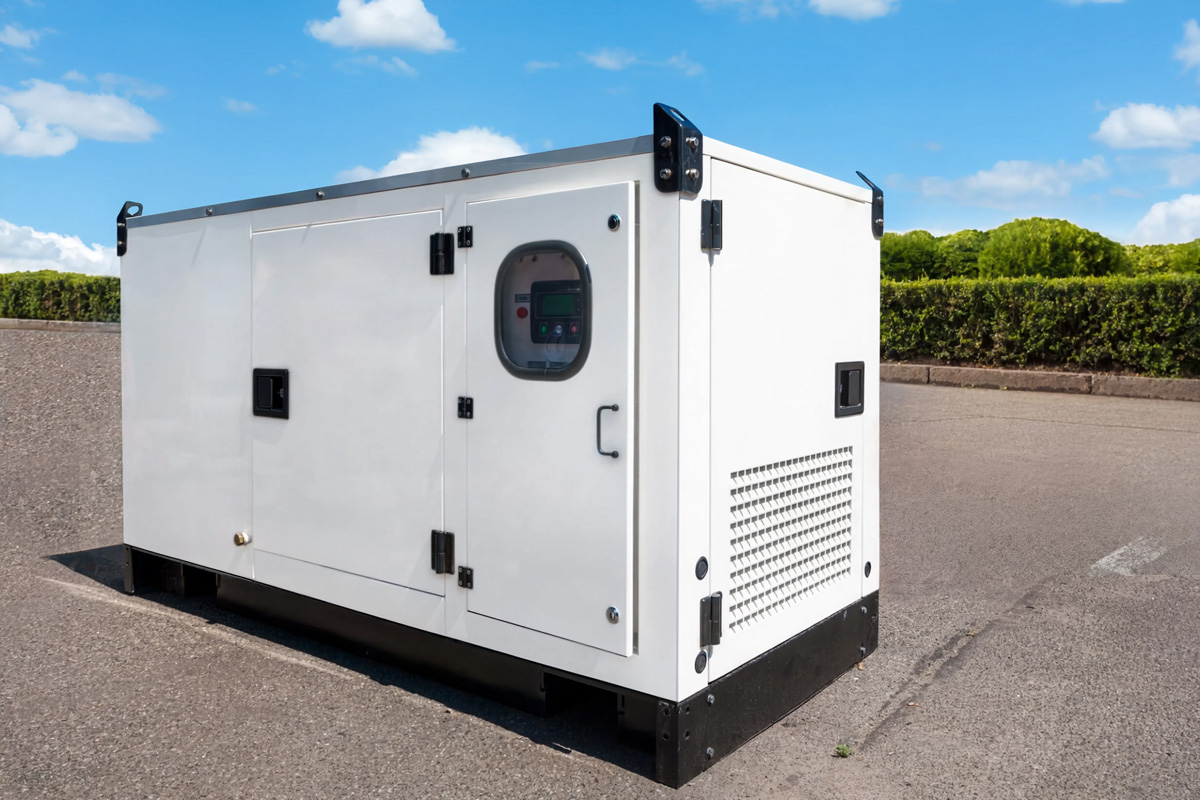
Like previous standards, “Stage V” aims to reduce pollutant emissions from non-road mobile machinery (agricultural and industrial equipment) as well as from generator engines. Delta Resistel provides technical solutions to comply with these emissions regulations.
Effective Date
As of January 1, 2020, all countries are affected
To comply with regulations, new engines manufactured by automakers must now meet Stage V requirements across all engine power ratings. As of early 2019, this applied to engines with power ratings from 0 to 56 kW and above 130 kW, and as of 2020, it also includes engines in the intermediate range—that is, those with power ratings between 56 and 130 kW.
While in Europe we refer to the Stage standard, in the United States it is known as Tier certification. However, these two regulations are similar in that they both have two main objectives:
- Set limits on permissible levels of fine particulate matter emissions, thereby reducing both the mass and the number of particles emitted.
- Reduce the amount of toxic gases emitted, particularly nitrogen dioxide.
The “Stage 5” regulations have applied to generators since January 1, 2020
Target audience
Who is affected by the Stage V standard?
It’s simple… all users of portable generators are committed to complying with these regulations, including rental companies, some maintenance providers, and users of generators on construction sites, among others.
Industrial Challenges
The challenge: protecting the environment, meeting customer expectations, and remaining competitive
More than just a regulatory formality, this is a challenge for manufacturers. The challenge is to help protect the environment while continuing to meet their customers’ expectations by producing reliable, high-performance equipment—without having to raise prices.
Engine Solutions
Generator Set Engines: Exhaust System Solutions
The mechanical components that help a generator set meet the Stage V standard are primarily found in the exhaust system.
Technical solutions that address the two objectives of the Stage V standard, namely:
- Reduce the toxicity and quantity of gases
There are two systems that can be used for generator set engines:
– The EGR valve
It activates when the engine is running at low RPM to reinject partially burned exhaust gases. It is needed when the engine is slightly warm and running at low load.
– The catalytic converter
It converts a large portion of the harmful gases (carbon monoxide, unburned hydrocarbons, nitrogen oxides) into harmless gases (water, carbon dioxide, and nitrogen dioxide). It operates most efficiently at around 400°C, that is, when the engine is hot and under heavy load.
- Reduce Particulate Emissions
Stage V engines must be equipped with a Particulate Filter (FAP). Its purpose is to capture particulate matter suspended in the exhaust gases and form a layer of soot. This deposit is burned off when the engine reaches operating temperature and the exhaust gases are hot enough.
Role of the bench
The load bank for testing, loading, and maintaining your equipment
The main problem arises when your equipment is operating at low load. In fact, at low power, the engine will produce white smoke and a lot of pollutants because it does not get hot enough and the diesel fuel burns only partially.
This effect is, of course, completely counterproductive in terms of the Stage V standard. Furthermore, it will damage the components designed to reduce pollution, not to mention engine problems such as wet stacking, wear, fouling, etc.
> Learn more: see “The Load Bank: What Is It Used For?”
Solutions
As you know, generators are not designed to operate at low load.
As we know, a low load profile has an impact on the generator set.
But there are solutions.
Energy requirements often vary, and it is necessary to bridge the gap between the power demand and the generator’s rated operating power. This is where a load bank comes into play, allowing you to test your generator set.
It is your responsibility to ensure that the generators comply with the requirements of the Stage V standard, which is established at the European level.
Yes, the solution is to install a test bench to test, maintain, and load your equipment.
The Delta Resistel teams are here to assist you, ensuring not only compliance with regulations but also the long-term performance and efficiency of your generators.
Do you have questions about Stage V regulations? Do you have a project? Would you like a free quote on one of our products?